 From northern Yokohama,
Japan
From northern Yokohama,
Japan
Duke Saionji Kinmochi (1849-1940), an all-mighty imperial advisor called Genkun, was instrumental in trying to keep the System of Japan working until the Second World War.
(Posted on January 14, 2026)
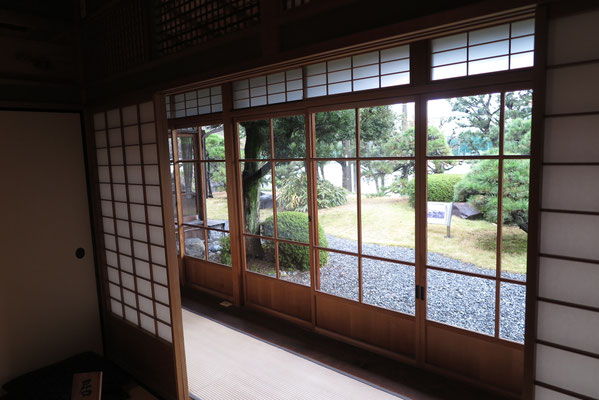
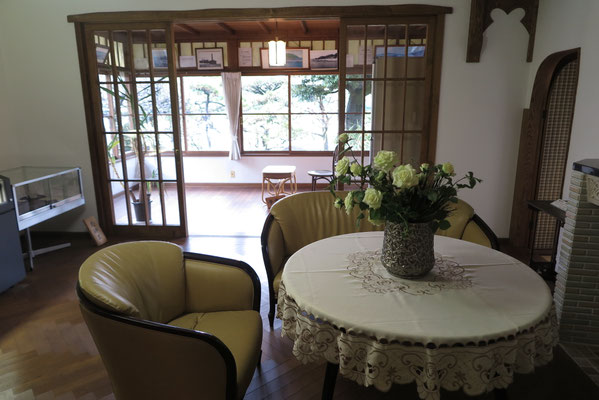
On December 24, 2025, I visited a simple, modest villa that was used by Duke Saionji Kinmochi in his later years at Okitsu, Shizuoka prefecture. It’s located about 160 km south west of Tokyo by car, facing the Pacific Ocean.
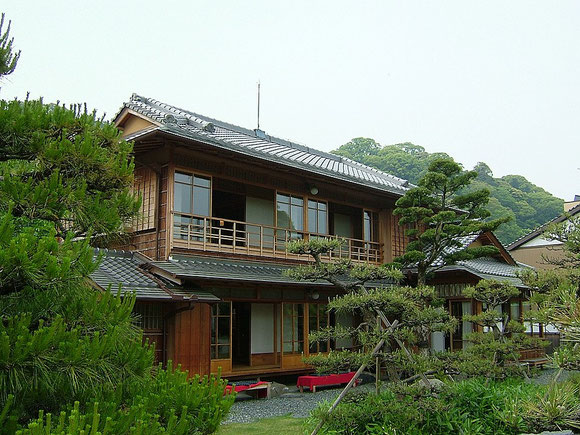
(The above photo by Tnk3a)
Who was he? What did he do? Saionji hailed from a family of court nobles. He was a Francophile as he had studied in France (graduated from Selborne University) for nearly a decade. After returning to Japan in 1880, Saionji was appointed to governmental and diplomatic positions one after the other. Eventually, he became prime minster twice (1906-1908 and 1911-1912). In 1916 Sainonji became a Genkun. What was the role of a Genkun? Simply put he was responsible for advising the emperor on the next suitable prime minster. From here, we would like to look at his work, especially his ideas for guiding Japan.
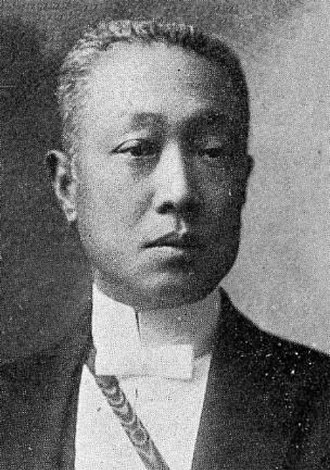
The photo of Saionji Kinmochi when he became prime minister for
the first time in 1906.
Although young Saionji served in the emperor’s army as a high-ranking officer during battles against pro-shogunate forces in 1868, he had a strong intention to study western culture. So, in 1871, he went to France and started studying law at the Sorbonne under the mentorship of the radical legal theorist Emile Acollas. What was the lasting legacy of his decade-long stay in France? It was French liberalism and constitutionalism.
During the initial stages after the Meiji Restoration, Japan was ostensibly governed by leaders who hailed from two provinces in the country’s west: namely Choshu (now Yamaguchi prefecture) and Satsuma (now Kagoshima prefecture). They were kingpins in carrying out the restoration of the emperor by defeating the Tokugawa shogunate on the battlefield.
Among those leaders two Choshu figures stood out: Itoh Hirobumi (1841-1909) and Yanagata Aritomo (1838-1922). Itoh served as prime minister four times between 1885 and 1909; he was credited with the proclamation of the Meiji constitution in 1889 and later represented a political party system set up on his own. Yamagata was an army general and became prime minister twice between 1889 and 1900; as such he represented the interests of the military. Saionji took up several governmental positions as mentioned largely under the mentorship of Itoh Hirobumi. So, when Itoh died in 1909, Sionji became the head of Itoh’s political party.
As a Genkun (the last and only one from 1924 onwards) Sionji maneuvered to maintain party politics based on international cooperation wherever possible, but sometimes concurred to the unavoidable appointments of army generals or navy admirals as prime ministers.
Japan’s imperialistic ambitions especially in northern China after the Russo-Japanese war (1904-1905) stoked tensions not only with China but also the western powers culminating in the creation of Manchukuo in 1932 and the war with China in 1937. Perhaps “the system of Japan” destined itself for war in the Pacific in 1941. Sionji died in 1940. Did he ever foresee the war?
Facts about Yokohama

Kohoku New Town
Jike countryside
A talk with Steve

Selected photos
The Philippines
The Middle East
Selected photos of Yokohama at night
Majestic sailing vessels

Japanese Language Proficiency Test (JLPT)
For more information,
go to .....
The Information Technology Engineers Examination (ITEE)

What is it? For more information, go to ....