 From northern Yokohama,
Japan
From northern Yokohama,
Japan
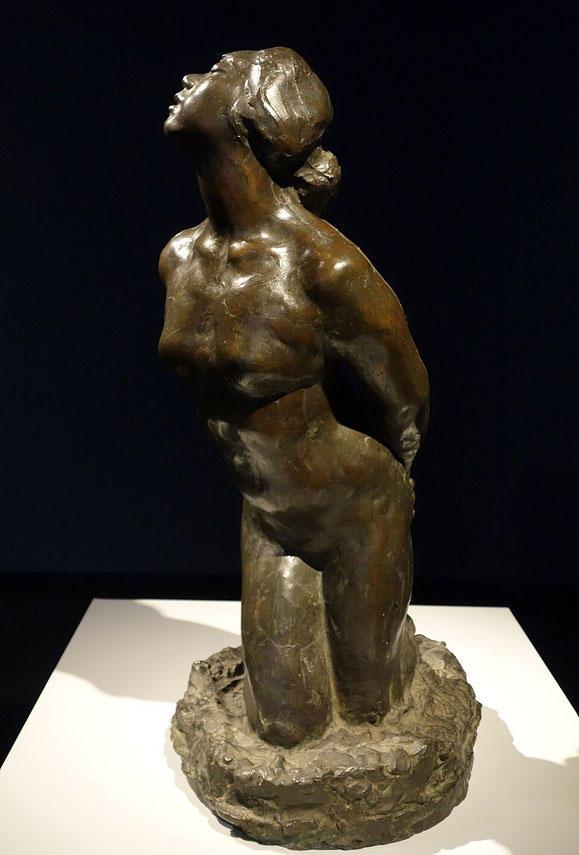
Shizuoka Prefectural Museum of Arts exhibits magnificent bronze sculptures by August Rodin (1840-1917), the father of modern sculptures.
(Posted on February 11, 2026)
The museum holds thirty-one pieces by August Rodin, including “The Thinker”, “The Burghers of Calais”, a towering and awesome “The Gates of Hell” and more in an exclusive exhibition hall. I visited the museum on December 25, 2025. It is located in the prefectural capital, Shizuoka city about 150 km south west of Tokyo. The population of the city is more than 600,000.
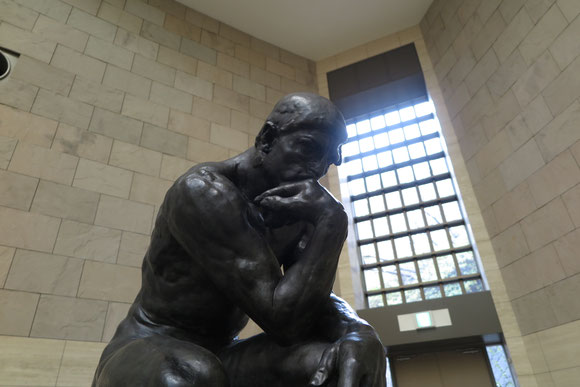
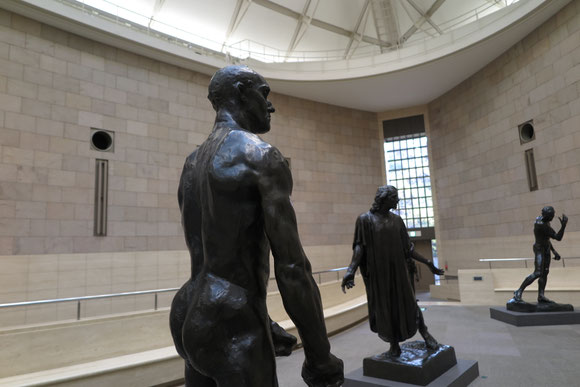

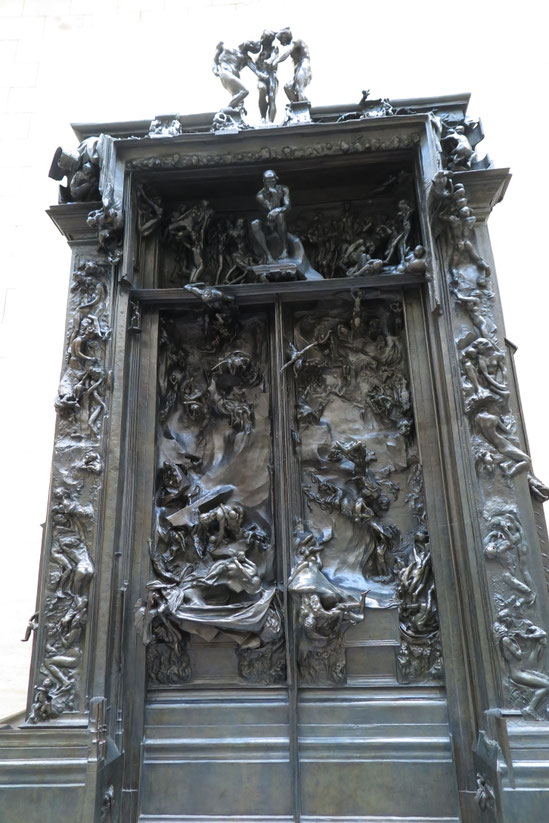
“The Gates of Hell” is one of seven such sculptures in the world.
When commissioned to create it, Rodin was inspired by none other than Dante’s “Divine Comedy, Inferno.” Because the magnitude of the project was so endeavoring it took considerable time to complete; in fact, Rodin had made several prototypes but he still had not finished it when he died in 1917.
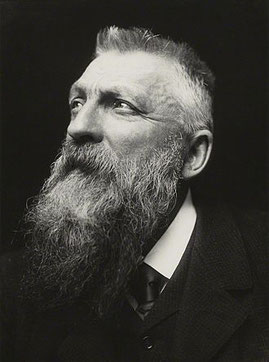
A few remarks about Rodin: He was deeply impressed by Renaissance sculptors, especially Donatello (1386-1466) and Michelangelo Buonarroti (1475-1564), when he studied while travelling to Italy in 1875. After becoming a master himself, Rodin influenced subsequent sculptors, including Camille Claudel, Antoine Bourdell, and Charles Despiau among others.
Rodin’s influence on Japanese artists was profound. For sculptors, I would like to talk about Ogiwara Rokuzan (1879-1910), who studied at Academie Julian in Paris in 1906. One of his remarkable works is “Woman,” created in 1910 just before his death.
Taking this opportunity, let me explain about Shizuoka city. First and foremost, Shizuoka is closely related to Tokugawa Ieyasu (1542-1616), the founder of the Tokugawa Shogunate that lasted nearly three centuries (1603-1867). When Ieyasu ostensibly retired in 1605 in favor of his son, he moved to Sunpu (today’s Shizuoka city) and erected Sunpu castle as his residence.
So, from Sunpu Ieyasu kept exerting his power and managed to solidify the shogunate. When he died in 1616 at the venerable age of 74, Ieyasu was buried in Sunpu. A Shinto shrine was soon erected to deify Ieyasu. The shrine is called Kunozan Tosho-gu. Both Sunpu castle and the shrine are popular tourist destinations.

The photo of Sunpu castle by edomurno tokoro

Facts about Yokohama
Kohoku New Town
Jike countryside
A talk with Steve
Selected photos
The Philippines
The Middle East
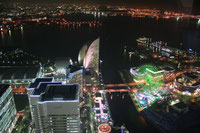
Selected photos of Yokohama at night
Majestic sailing vessels

Japanese Language Proficiency Test (JLPT)
For more information,
go to .....
The Information Technology Engineers Examination (ITEE)

What is it? For more information, go to ....